
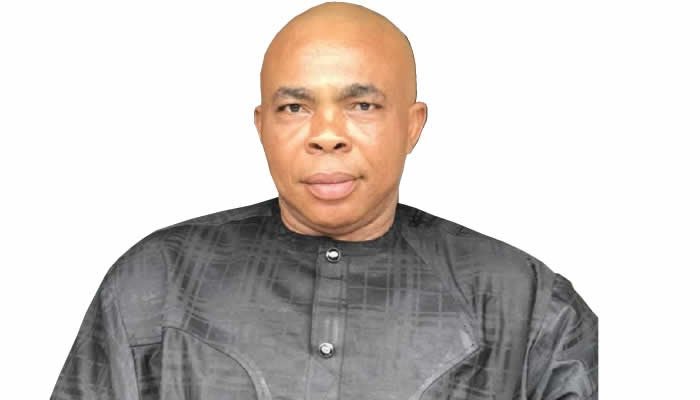
The Chairman, Joint National Associates of Persons with Disabilities, Imo State, Dr Stanley Nwachukwu, 51, shares with GODFREY GEORGE his life experiences living with paralysis after being hit by poliomyelitis at age two
Please tell us a bit about yourself.
I am Dr Stanley Nwachukwu. I am from Umudioka Ukwu in the Orlu Local Government Area of Imo State. I am currently the Chairman, Joint National Associations of Persons with Disabilities, Imo State chapter, and the President of Disabled Destiny Track Foundation.
How best would you describe your upbringing as a child?
I was raised in a close-knit family. I was treated with much love by all my family members. I would say my family was a middle-class home. Sometimes, most of my needs and that of my siblings were provided speedily; other times, we were told to wait until our parents got what we asked for. It was not an all-bad experience. There were up times and there were down times, but I wouldn’t trade that experience for anything. It moulded me into who I am today.
Were you born with this disability?
I was not born with any form of disability. I was told that I became sick when I was about two years old and my parents felt it was the ‘common’ malaria that all children suffer. I was being treated with malaria drugs for a while. After some time, one of my legs began to reduce in size, and I could not walk anymore. I became paralysed in that leg. It was much later that my family discovered that I had poliomyelitis and it was responsible for the paralysis I suffered till date.
Did this condition affect your schooling?
Yes, it did. I think I began school a year or two later than I was supposed to start, but that didn’t worry me much. The experience that nearly threw me off balance was my days in medical school at the Abia State University, Uturu. A particular lecturer was insistent on my standing with fellow course mates in carrying out some analysis during our studies, knowing full well that I cannot stand a long time with my clutch which I used as aid then to walk. I even made a special stool where I could sit at such study times, but this same lecturer insisted I should not bring in that stool in his class. His refusal after many pleas frustrated me out of medical school but thank God I later undertook some correspondent courses and for long have forgotten that ugly experience. I later went back to Abia State University, Okigwe, where I studied Business Management and bagged my PhD.
Did your parents make any efforts for you to be able to walk normally?
My parents tried everything humanly possible so I would walk. After a while, I was able to walk for a few weeks, but I didn’t know I was doing more harm to myself. The pressure had stressed my legs so I was advised to use one crutch. It became worse; I started using two crutches. For three years now, I have been advised to use a wheelchair because the pressure on my legs is too much for them to carry.
Were you discriminated against or bullied by other students and/or teachers in school?
I can’t think of any experience of discrimination against me that is related to my disability, but for bullying, I had some encounters, where I was punished in school by senior students as part of school life, but I don’t think of it much as being bullied.
What was your experience looking for a job?
I have never searched for a job. While I was in school, I began a small-scale business that gave me cash to do a few things then. Today, I have about 40 persons under my employ. I am really grateful to God.
When did you finally accept the fact that you had to live with this disability?
I have never seen myself at any time as one with a disability. I have never. There is nothing anyone with two legs can do that I cannot do. I drive from Owerri (in Imo State) to Abuja and any other part of Nigeria. I run my business conglomerate here in Nigeria and in Ghana. I have been blessed by God.
Do you think Nigerians have done enough to discourage discrimination against persons living with disabilities?
Much needs to be done. Although in recent years there have been little improvements, Nigerians still need to do more. Now you hardly hear stories of demonising a person with a disability or considering them as the dregs of society. The truth is that a lot more needs to be done by the government and individuals. I have had the opportunitty to travel to America and some parts of Europe. I have been to some African countries where people with disabilities are truly treated with special regard. When buildings, even high-rises, are constructed, they are considered. There are parking lots consciously designed for people with disabilities; welfare packages for us and many benefits accorded to those in our community. Sadly, we cannot say the same for Nigeria.
READ ALSO:I Wrote Almost Every Exam At Hospital’ — UNILAG First-Class Graduate With Sickle Cell
Stories You Shouldn't Have Missed:
- Grateful Form 4 Student Impresses Netizens With Beautiful Handwriting in Letter to Sponsor
- How Lagos teacher flogged my son to death on eve of his 12th birthday – Dad
- Drama As Lady Who Abandoned Her Child 7yrs Ago, Returns Back to Claim Him (Video)
- “I Aimed for 5.0 from Day One” – UNILAG’s Co-Best Graduate, Damilare Adebakin Shares His Journey
- Student who sells things to take care of her family gets huge money from kind People
- Exceptional Young Woman Graduates with Perfect 5.00 CGPA in Computer Science, Wins Top Honors
- ASUU Criticizes Dismissal of 120 Lecturers for Strike Participation
Join Our 500,000+ Community:
Thank you so much for reading. We will appreciate it if you share this with your loved ones.